Student Spotlight: From Stuck at 25k Words to a Finished Draft With Lindsay Sfara
You can create an outline, plan every chapter, and still get stuck once you start writing. I know that's not what you want to hear, but it's true—and it's exactly what happened to one of my students, Lindsay Sfara.
Before drafting her superhero fantasy novel, Lindsay created a full chapter-by-chapter outline in a spreadsheet. But about 25,000 words into the draft, she hit a wall.
Her story included multiple plot threads and dual protagonists. The further she wrote, the harder it became to see how everything connected or what needed to happen next.
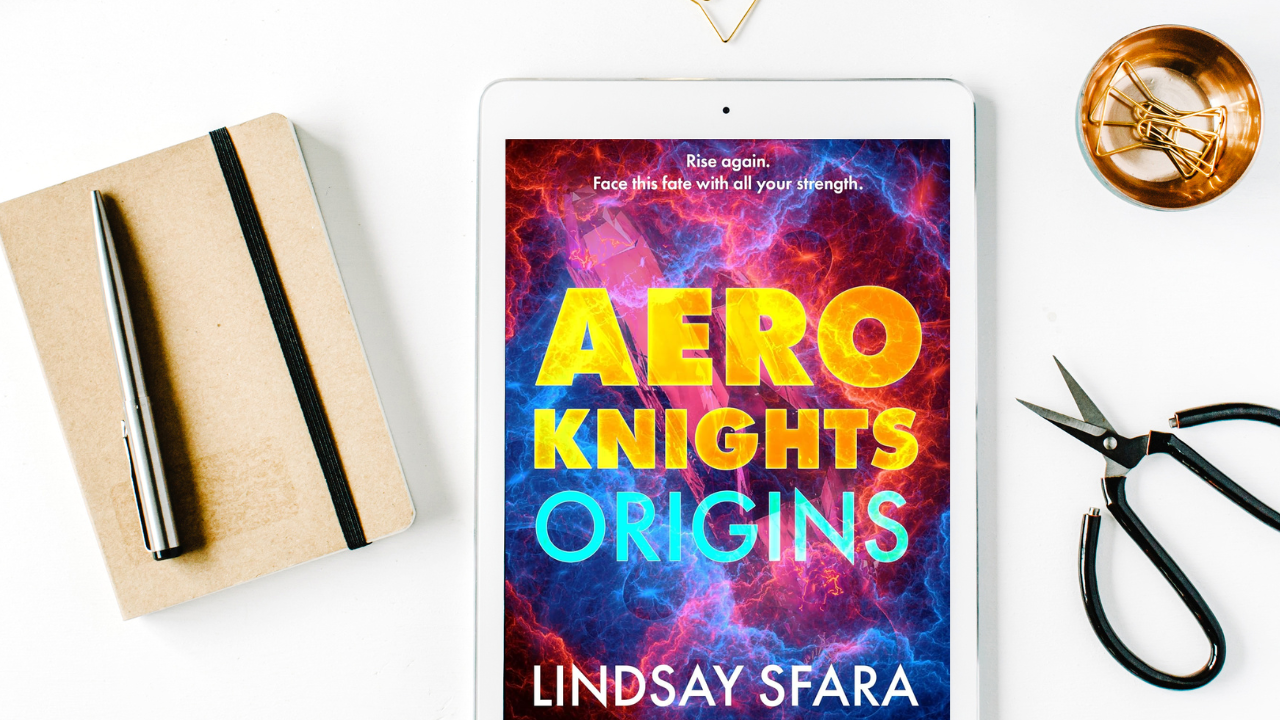
After six frustrating months of trying to figure it out on her own, Lindsay enrolled in my Notes to Novel program. Today, that same manuscript is her published debut novel, Aero Knights: Origins. So, what changed?
Why Lindsay's First Outline Still Left Her Stuck
Lindsay did what many first-time authors do: she created an outline that listed what she wanted to happen in each chapter. Some chapters were summed up with a note like, "This character goes to the park."
On the surface, the outline looked complete enough to draft from. But a list of plot events can only take you so far. If you don't understand how those events connect to your characters, the central conflict, and what's at stake, it's going to be hard to write a story that works.
Getting stuck didn't mean Lindsay lacked talent, motivation, or a good idea. Her outline told her what happened, but it didn't give her enough direction to carry the story from beginning to end.
3 Changes That Helped Lindsay Finish Her First Draft
When Lindsay joined Notes to Novel, she didn't solve the problem by adding more events to her spreadsheet. She stepped back and developed the parts of her story that would help those events connect.
1. She got clear on what her story was really about
One of the first lessons in Notes to Novel asks why you want to write this particular book and what you want readers to take away from it.
Lindsay came up with something truly beautiful: "Happiness comes from valuing your true self and what you actually want, instead of what everyone else says you should want." (So good, right?)
She then used that message to shape her lead characters. One learns to accept old trauma, one rebuilds herself after losing her memories, and one learns to forgive himself.
Now, the different plot threads felt like parts of one story instead of separate stories competing for space.
2. She gave her antagonist something to actively pursue
In her first outline, Lindsay focused mainly on what her heroes were doing. That meant she had to keep inventing new problems for them to face.
Once Lindsay knew what the antagonist wanted and what she was willing to do to get it, the story began producing conflict more naturally.
Whenever Lindsay felt stuck, she could think about what the antagonist was doing behind the scenes. Whatever the antagonist did next created a problem the heroes had to respond to.
"The moment I started thinking more about, 'What does my antagonist have to say about this?'" Lindsay explained, "that's when the story started to feel organic."
The conflict now grew out of what the characters wanted and how those goals clashed. This is why, in Notes to Novel, writers develop the antagonist before doing the same work on the protagonist and secondary characters.
3. She rebuilt her outline so the story had a clear flow
Once Lindsay understood her protagonists, antagonist, and central conflict, she returned to her outline.
This time, she could do more than list what happened in each scene. She could see how and why one scene led to the next.
Lindsay described the difference as creating "flow for your story, versus dumping story events in an outline that don't relate to each other."
That flow gave her enough direction to keep drafting without stopping after every scene to figure out what should happen next.
The work didn't suddenly become easy. But Lindsay now had a plan she could return to—and live coaching when she needed help applying it.
From 25,000 Words to a Finished Draft
During Lindsay's first six months of drafting on her own, she wrote about 25,000 words and got stuck. During the next six months, after working through Notes to Novel and rebuilding her outline, her manuscript grew to 100,000 words.
Same writer. Same story. Same amount of time.
What changed was the process she was using.
Lindsay eventually finished her first draft at 157,000 words. And yes, the book still needed real revision. But the heart of the story held together. She had written a complete book she could improve—not a collection of disconnected events she needed to rebuild from scratch.
That draft became Aero Knights: Origins, the first book in Lindsay's superhero fantasy series.
And now understands how to approach any story she wants to write next. As she puts it, "Now, I know exactly what needs to be done for any story I write."
Ready to Write Your Own Novel?
If you have an outline but still stop every few scenes to figure out what happens next, the problem may not be your motivation—or the amount of detail in your spreadsheet.
Your outline may be missing the story development that helps those chapters connect and build toward a satisfying ending.
Notes to Novel is my step-by-step program that helps you develop your story, create a scene-by-scene outline you can trust, and write your first draft through to The End.
It's the same process that helped Lindsay go from stuck at 25,000 words to a finished draft—and eventually, a published debut novel.
Join the Notes to Novel interest list to be the first to know when enrollment opens again.